
























God Knows Your Pain

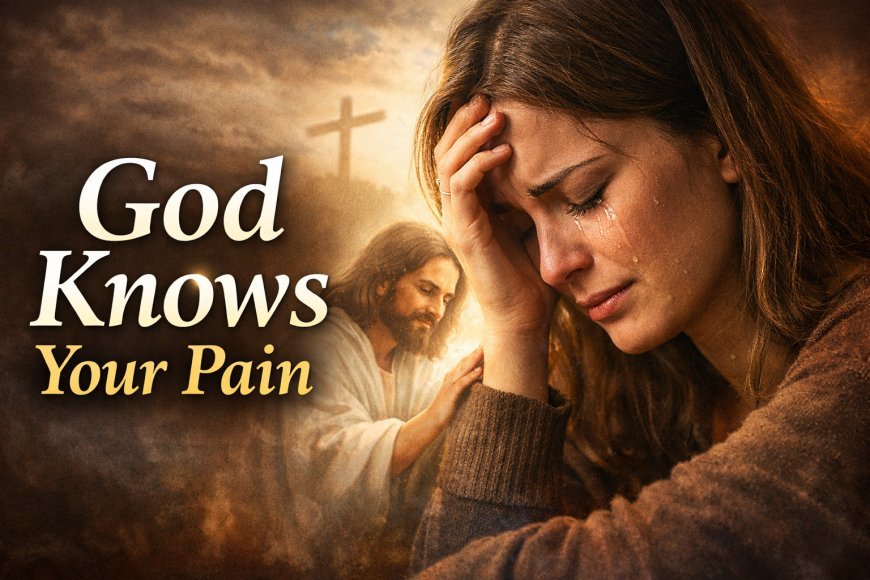
Pain is one of the most universal human experiences, yet it often feels deeply personal and isolating. Many people carry wounds that are invisible—hurts that cannot be explained easily, grief that has no words, and struggles that are hidden behind a normal smile. The Bible does not deny the reality of pain. Instead, it speaks directly to it and reveals a God who is fully aware of every tear, every heartbreak, and every silent cry.
The truth Scripture reveals is comforting and powerful: God knows your pain. Not partially. Not vaguely. Completely.
God Sees the Pain You Hide From Others
One of the hardest parts of pain is not the pain itself, but the loneliness that comes with it. Many people are suffering silently. You may still go to work, still talk normally, still smile in public, and still act like everything is okay. But inside, your heart is carrying a weight that nobody knows about. Some people are experts at hiding their wounds because they were taught that showing emotions is weakness, or because they don’t want to be a burden to others. Yet the Bible teaches something very comforting: God sees the pain you hide. Psalm 56:8 says, “You keep track of all my sorrows. You have collected all my tears in your bottle.” This is not poetic exaggeration—this is God revealing His heart. He is not a distant God who ignores human suffering. He is a Father who notices even the tears that fall silently in the night. The world may not understand why you feel the way you do, and people may even judge your sadness, but God understands the full story. He knows what you’ve been through, what you lost, what broke you, and what you are still trying to survive. When you feel like nobody notices, God is saying, “I see you.” Even when your pain is invisible to others, it is never invisible to heaven. This truth changes everything because it means your suffering is not meaningless. God’s attention is not based on how loud your pain is. Even if you never speak about it, God knows it completely. This is why you can be honest with Him. You don’t have to pretend in prayer. You can come with your brokenness, your confusion, your fear, and your unanswered questions. When you understand that God sees you, you stop feeling abandoned. You may still be hurting, but you will not be hurting alone.
God Is Close to the Brokenhearted
Many people assume that God comes near only when we are strong, faithful, and doing everything right. But Scripture reveals the opposite: God is closest when we are broken. Psalm 34:18 says, “The Lord is close to the brokenhearted and saves those who are crushed in spirit.” This verse is not a motivational quote—it is a divine promise. When your heart is crushed, God is not far away. When you are exhausted emotionally, when you can’t even pray properly, when your faith feels weak, God does not step back. He steps closer. Pain often creates the illusion that God has abandoned us, especially when prayers seem unanswered. But silence does not mean absence. A loving father does not leave his child just because the child is crying. Instead, he holds the child tighter. In the same way, God’s presence is often strongest in the seasons where you feel weakest. The enemy wants you to believe that your brokenness disqualifies you from God’s love, but the truth is that brokenness attracts God’s comfort. God is not repelled by your tears; He is moved by them. In fact, Jesus Himself said in Matthew 5:4, “Blessed are those who mourn, for they shall be comforted.” That means mourning is not shameful—it is a place where God releases comfort. Many people try to run away from pain through distractions, entertainment, addictions, or constant busyness, but those things never truly heal. Only God’s presence can bring deep peace into a wounded heart. When you understand that God is close to you, you stop trying to suffer alone. You begin to pray differently, not as someone begging a distant God, but as someone leaning on a near Father. God’s closeness does not always remove the pain instantly, but it gives you strength to endure. His presence becomes your shelter, your safety, and your hope. And over time, you will realize that God did not leave you in your suffering—He walked with you through it.
Jesus Understands Your Pain Personally
One of the most powerful truths of Christianity is that God did not remain distant from human suffering. He entered it through Jesus Christ. Many people imagine Jesus only as a miracle worker, but they forget that He was also a man of sorrows. Jesus experienced pain in almost every form: emotional, physical, relational, and spiritual. He was rejected by His own people, misunderstood by His family, and betrayed by one of His closest disciples. He faced public humiliation, false accusations, and deep loneliness. Isaiah 53:3 describes Him as “a man of sorrows and acquainted with grief.” This means Jesus did not just know about pain—He lived it. That is why Hebrews 4:15 says, “For we do not have a high priest who is unable to sympathize with our weaknesses.” In other words, when you pray, you are not speaking to someone who cannot relate. You are speaking to a Savior who understands the weight of suffering. Think about how comforting that is. When you say, “Lord, I feel betrayed,” Jesus understands betrayal. When you say, “Lord, I feel rejected,” Jesus understands rejection. When you say, “Lord, I feel alone,” Jesus understands loneliness. Even in the Garden of Gethsemane, Jesus felt overwhelming sorrow, to the point that He said His soul was “overwhelmed with sorrow to the point of death” (Matthew 26:38). That means your emotional pain is not foreign to Him. Jesus even wept openly (John 11:35). He was not ashamed of tears. This shows that God does not call you weak for crying. Your emotions are not sinful—they are human. The difference is that Jesus shows you where to bring them: to God. Because Jesus suffered, you can trust Him with your suffering. And because He rose again, you can trust that your pain will not have the final word. Your story is not ending in sorrow. Jesus understands you deeply, and He is not only compassionate—He is powerful enough to heal, restore, and renew.
God Knows the Root of Your Pain
Sometimes the pain we feel is not only from what happened recently, but from wounds that have been growing quietly for years. Many people carry hidden pain from childhood experiences, family rejection, harsh words spoken over them, trauma, failures, or relationships that broke them deeply. The hardest part is that others may only see your reaction, not your wound. They might say, “Why are you so sensitive?” or “Why are you acting like this?” But God sees deeper than people. He knows the root of your pain. Psalm 139:1-4 reveals that God knows everything about us: “You have searched me, Lord, and you know me… Before a word is on my tongue you, Lord, know it completely.” That means God understands even the emotions you cannot explain. Sometimes you don’t even know why you feel heavy. Sometimes you don’t know why you suddenly feel anxious, angry, or depressed. But God knows the exact cause. He knows the moment you were hurt. He knows the moment you were abandoned. He knows the moment you lost hope. This is important because healing does not happen only by changing the outside—it happens by addressing the inside. God is not only interested in fixing your circumstances; He wants to heal your heart. Many people try to cover the pain with distractions, achievements, relationships, or material things. But the wound remains. God, however, is a healer who works at the root. Like a skilled doctor, He does not treat only the symptoms; He treats the source. When you allow God to touch the root of your pain, true freedom begins. This may involve forgiveness, letting go of bitterness, releasing shame, and learning your identity in Christ. It may also involve a process of rebuilding your trust. God is patient in this process. He does not rush your healing. He understands how deep the wound is. And because He knows the root, He knows the exact way to heal you. You don’t have to explain everything perfectly to God. You can simply come and say, “Lord, You know. Heal me.” And He will.
God’s Love Does Not Leave You in Suffering
Many people struggle with the question, “If God loves me, why am I suffering?” This is one of the deepest spiritual struggles, and it has caused many to doubt their faith. But the Bible teaches clearly that suffering is not proof of God’s absence. In fact, some of the people most loved by God faced intense pain. Joseph was betrayed by his brothers and spent years in prison before God elevated him. David was anointed king but spent years running for his life. Job lost almost everything even though he was righteous. Paul suffered greatly while spreading the Gospel. Even Jesus, the Son of God, suffered on the cross. This shows us that suffering is not a sign that God has stopped loving you. It is often a part of living in a broken world. However, the difference for a believer is this: you do not suffer alone. Isaiah 43:2 says, “When you pass through the waters, I will be with you.” God does not promise a life without pain, but He promises His presence through it. Sometimes God allows suffering not to destroy you, but to shape you. Pain can refine your faith, deepen your prayer life, and strengthen your character. But God’s love remains constant. Romans 8:38-39 says nothing can separate us from the love of God—not trouble, not hardship, not persecution, not famine, not danger, not even death. That means even when life feels cruel, God’s love is still holding you. Sometimes we feel God’s love emotionally, and sometimes we don’t. But love is not based on feelings; it is based on truth. God proved His love on the cross. The cross is the greatest evidence that God cares. When you are suffering, look at the cross and remember: God is not against you. He is for you. He may not remove the pain instantly, but He will carry you through it. And one day, you will see that even in the darkest moments, His love never left you.
God Can Turn Your Pain Into Purpose
One of the most beautiful truths in Scripture is that God is a Redeemer. He does not only heal pain—He transforms it. This is why Romans 8:28 says, “And we know that in all things God works for the good of those who love Him.” This verse is often misunderstood. It does not mean everything that happens is good. Some things are evil, unfair, and deeply painful. But it means God is powerful enough to bring good out of even the worst situations. Think about Joseph’s story. His brothers sold him into slavery, and he suffered unjustly for years. But later he said, “You meant it for evil, but God meant it for good” (Genesis 50:20). That is the power of God. He can take betrayal and turn it into blessing. He can take rejection and turn it into a new direction. He can take loss and turn it into a testimony. Many people today are helping others because of the pain they once went through. The person who comforts others in grief often understands grief personally. The person who encourages others often knows what depression feels like. The person who prays deeply often learned prayer in suffering. God can use your pain to make you more compassionate, more wise, and more spiritually strong. He can also use it to shape your calling. Sometimes the very thing that wounded you becomes the area where God uses you to heal others. This does not mean God caused your pain, but it means He can redeem it. Pain in God’s hands becomes purpose. Your scars become proof of His faithfulness. Your story becomes someone else’s hope. Even if you cannot see the purpose now, God is working behind the scenes. Your pain is not wasted. God is building something in you and through you. And when you look back one day, you may realize that the season you thought would destroy you actually became the season that shaped you into who God created you to be.
Waiting Seasons Hurt, But God Is Still Working
Waiting is one of the hardest forms of pain because it is slow. It is not a sudden tragedy that ends quickly. It is a long season where you feel stuck, uncertain, and tired. Many believers struggle not because they don’t have faith, but because they are tired of waiting. Waiting for healing, waiting for financial breakthrough, waiting for marriage restoration, waiting for a job, waiting for a child, waiting for peace, waiting for answers. Waiting makes you feel like God is delaying on purpose. But the Bible shows that waiting is often part of God’s process. Psalm 37:7 says, “Be still before the Lord and wait patiently for Him.” Waiting is not punishment. It is preparation. A seed grows underground before it grows above ground. The growth is happening, but you cannot see it. In the same way, God is working in the hidden places of your life. Waiting seasons often produce spiritual maturity. They teach patience, endurance, humility, and dependence on God. Isaiah 40:31 says, “Those who wait on the Lord shall renew their strength.” Notice: waiting is connected to renewal. That means God does not waste the waiting season. He uses it to strengthen you. Sometimes God delays because He is protecting you. Sometimes you are not ready for what you are asking for. Sometimes the timing is not right. And sometimes God is arranging things behind the scenes in ways you cannot imagine. Many blessings require divine timing. If God gives it too early, it may harm you instead of helping you. This is why waiting is painful but meaningful. During waiting seasons, you may feel weak, but God is building your faith. You may feel forgotten, but God is preparing your future. The silence of God does not mean He is inactive. He is working. And when the right time comes, God will open doors that no one can shut. Your waiting will not be in vain.
God Heals You Step by Step
Many people expect healing to happen instantly. They want one prayer, one worship song, one sermon, one moment, and everything to change. Sometimes God does heal instantly, but often He heals gradually. This is because God is not only interested in removing pain; He is interested in restoring your whole life. Psalm 147:3 says, “He heals the brokenhearted and binds up their wounds.” The phrase “binds up” shows a process. When someone binds a wound, they do it carefully. They clean it, cover it, and protect it so it can heal. God heals like that. He is gentle. He does not rush you. Healing often happens in stages: first God gives you strength to survive, then He gives you peace, then He gives you wisdom, then He gives you freedom. Sometimes healing includes forgiveness. Sometimes it includes learning new boundaries. Sometimes it includes renewing your mind through Scripture. Sometimes it includes breaking unhealthy patterns. God’s healing is deep, not shallow. That is why it takes time. A broken bone does not heal in one day. A deep emotional wound also takes time. But God is faithful in the process. Even if you still feel pain, you may notice small changes: you cry less, you feel hope again, you can sleep better, you can pray again, you can smile again. Those small changes are signs that healing is happening. God does not forget you halfway. Philippians 1:6 says, “He who began a good work in you will carry it on to completion.” That means God will finish what He started. Healing is not about becoming the person you were before the pain. It is about becoming the person God is shaping you into through the pain. Step by step, God will restore your heart. And one day, you will look back and realize: you are not the same person who once cried in darkness. God has healed you.
Your Pain Is Not the End of Your Story
Pain often feels permanent when you are in it. It makes you think, “This is my life now.” But the Bible teaches that pain is a season, not a destiny. Psalm 30:5 says, “Weeping may endure for a night, but joy comes in the morning.” Night seasons feel long because you cannot see the end. You cannot see the future. You cannot see the light. But morning always comes. God is a God of restoration. He is a God of new beginnings. Many people in the Bible thought their story was over. Hannah thought she would never have a child, but God answered her prayer. Ruth thought her life ended in loss, but God gave her a new family and future. Peter thought his failure disqualified him after denying Jesus, but Jesus restored him and used him powerfully. Your pain does not cancel your calling. Your suffering does not erase God’s plan. Even if you have lost something precious, God can still rebuild your life. Joel 2:25 says, “I will restore to you the years that the locust has eaten.” This means God can restore what you thought was permanently lost. Your pain may have left scars, but scars are not signs of defeat. Scars are signs of survival. And in God’s hands, scars become testimonies. One day, your story will not be “I suffered.” It will be “God carried me through.” Your pain is not the final chapter. God is still writing your story. Even now, in the middle of the struggle, He is working. And when the next season comes, you will realize that the God who saw your tears is the same God who will bring your joy. Hold on. Your story is not finished.
What's Your Reaction?
 Like
0
Like
0
 Dislike
0
Dislike
0
 Love
0
Love
0
 Funny
0
Funny
0
 Angry
0
Angry
0
 Sad
0
Sad
0
 Wow
0
Wow
0